Estimating software for small contractors: what actually saves time
Estimating software saves a small contractor time in three places: pulling a price instead of rebuilding one, getting the number to the customer before you have driven home, and chasing the quote after it goes out. Everything past that is filing, and a spreadsheet already files.
Where the hours actually go
Most contractors assume estimating time is measuring time. It is not. Walking a repaint or a floor takes as long as it takes, and no software walks the house for you. The hours disappear afterward, at the kitchen table at nine at night, rebuilding a price you have already built forty times, digging for what you charged for the same work in April, retyping the same three scope paragraphs, and fighting a document until it stops looking like it came off a legal pad.
That is the part worth paying to remove. If a tool does not shorten the distance between finishing the walkthrough and the customer holding a number, it is a filing cabinet with a subscription attached.
The four things worth paying for
Judge any estimating tool on these. The rest of the feature list is noise.
- A price table you control. Your rates, for your work, editable by you without opening a support ticket. If the tool ships national pricing and hides the arithmetic, you are guessing with extra steps. Pricing for margin only works when you can see what is inside the number.
- The quote gets built on site. On a phone or tablet, standing in the driveway, sent before you pull out. This is the change that moves a close rate, and it is the one most contractors never switch on.
- Something the customer can sign where they read it. Print, sign, scan, email back is where approvals go to die. A proposal they can accept on the phone in their hand removes a day or more from every job that was already a yes.
- Follow-up that runs without you remembering. Most quotes that go quiet were never chased. A tool that pings the ones sitting untouched is worth more than any reporting screen it comes with.
What to ignore, and what it should cost
Ignore anything that only pays off at a size you are not. Crew scheduling boards, multi-branch permissions, inventory, and job costing down to the caulk tube are real features and they matter eventually. They are also the features that carry the price, and they are the ones that sit unused while you keep building quotes the old way.
On price, mid-2026 ranges for small contractor tools run from free at the plain quote-builder end to a few hundred dollars a month per seat once scheduling and job costing get bundled in. Use that as a sanity check, not a budget. The number that decides it is the gross profit on one job, not your revenue. If the subscription costs less than the margin on a single job you would have lost to a slow quote, the math is not close. If you cannot say which job that is, you are not ready to buy yet.
When a spreadsheet is still the right answer
A spreadsheet is genuinely fine when one person estimates, that person remembers every open quote without looking, and the quotes go out the same day anyway. Plenty of good companies run that way for years. The spreadsheet stops working the moment a second person needs to read the record, or the number of open quotes passes what you can hold in your head. That threshold is the same one we wrote about for CRMs versus spreadsheets, because it is the same problem wearing a different hat.
One caution. Do not buy estimating software to fix a speed problem that is really a scheduling problem. If quotes go out four days late because you cannot get back to the office, no tool fixes that, and how fast the estimate goes out is worth sorting before you shop.
How the Bellingham companies run it
We run painting and flooring companies in Bellingham along with the licensed Washington general contractor they operate under, and the estimating side of that is a price table we maintain ourselves plus a proposal the customer can open and sign on a phone. The price table is the boring half and the half that matters. When material or labor moves, we change it in one place, and every quote after that is correct without anybody remembering to be careful.
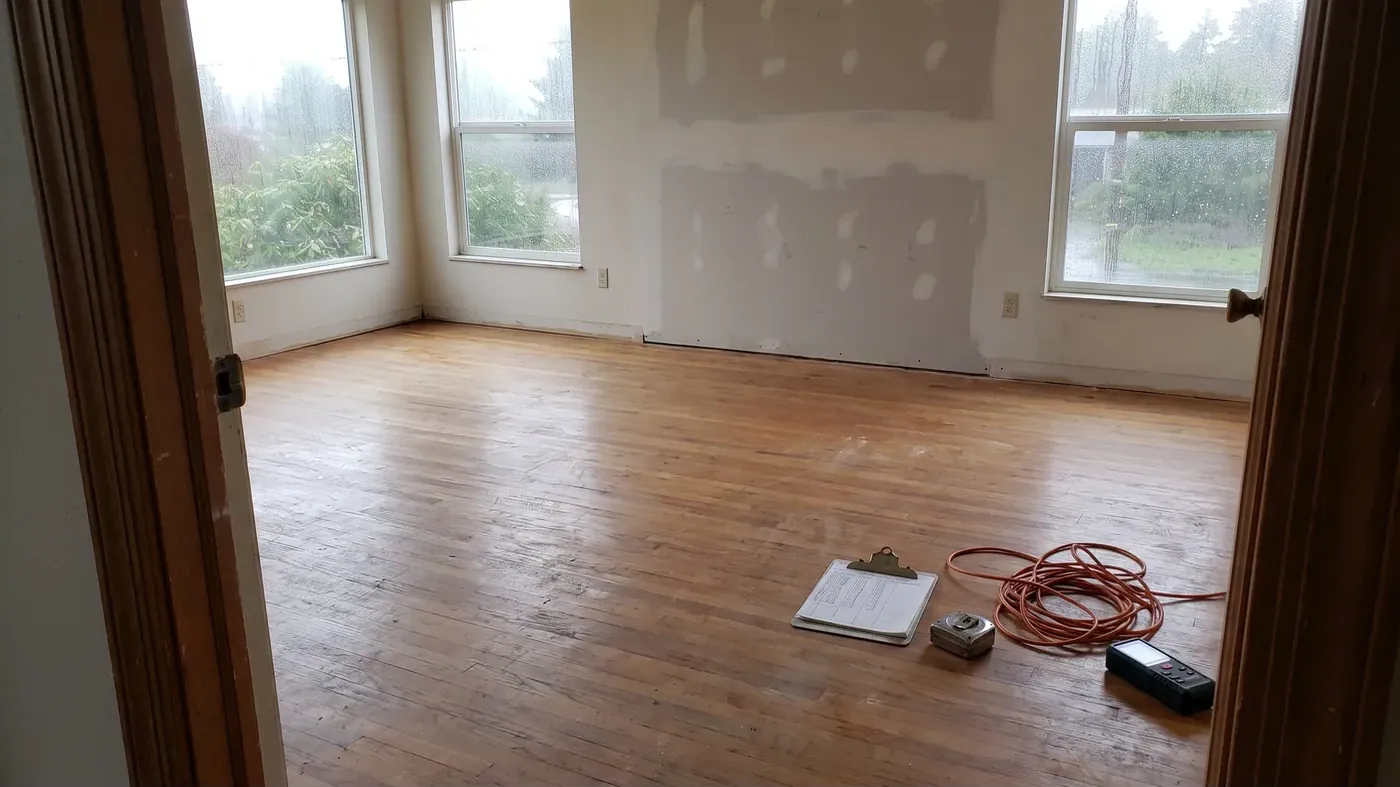
We measure the same way we always did, with a tape and a laser and a written sheet. The software starts after that, and it ends when the customer has signed. Quote follow-up runs on its own and stops the moment somebody replies, because a sequence that keeps talking after a person answers is worse than no sequence.
It is not exotic and it is not a platform. It is the order the work moves in, held in one place so the slow steps cannot quietly come back.
A free look at where quoting loses time
The free audit covers your site, local search, response time, quoting, and follow-up, then ranks what is worth fixing first. Joshua replies within one business day, and the written findings usually follow within a week.